
Most patients would not think twice about seeing a medical specialist for a complex heart condition or serious orthopedic injury. Yet when it comes to complex dental care, many may not realize dentistry also has specialists with years of additional training in specific areas of treatment.
About 4 in 10 U.S. adults over age 30 have some level of periodontitis, according to the Centers for Disease Control and Prevention. The condition affects the gums and supporting structures of the teeth and can cause irreversible bone loss.
“People understand the role of a specialist in medicine, but that same understanding does not always carry over into dentistry,” said Dr. Jose I. Arauz, a board certified periodontist at Carolina Dental Specialty Center in Jacksonville. “General dentists are an important part of long term oral health. When a condition involves the bone, gum tissue or complex surgical treatment, there are specialists whose training is specifically focused on those areas.”
Periodontists specialize in the prevention, diagnosis and treatment of periodontal disease and the placement of dental implants. According to the American Academy of Periodontology, periodontists complete three additional years of education beyond dental school, with advanced training focused on the gums, bone supporting the teeth and dental implant treatment.
Arauz said general dentists and specialists often play distinct but collaborative roles in patient care.
“The general dentist often knows the patient and their dental history very well,” Arauz said. “When something becomes more complex, the specialist brings focused training and experience to that specific condition. It should be a collaborative process.”
The difference can be particularly important in cases involving periodontitis, an irreversible condition involving bone loss around the teeth. Symptoms such as bleeding gums, persistent inflammation and gum recession may be easy for patients to underestimate.
“When we evaluate a periodontal patient, we are looking at much more than whether the gums appear red or irritated,” Arauz said. “We are evaluating the bone, the tissue around the teeth, areas of recession and the overall stability of the teeth.”
Similar considerations apply to dental implant surgery. Because dental implants are placed into the jawbone, the health and amount of surrounding bone and gum tissue are important parts of treatment planning.
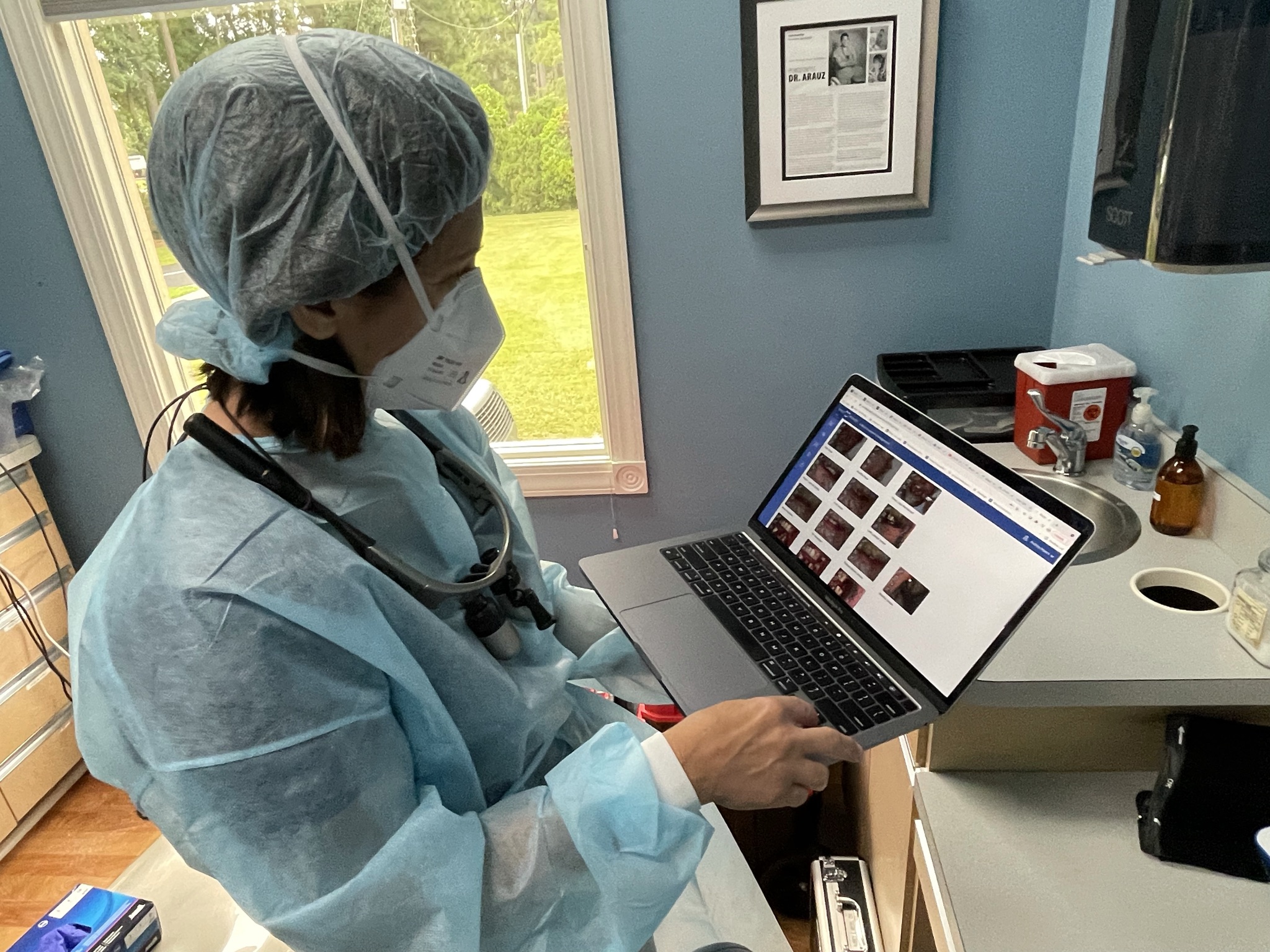
At Carolina Dental Specialty Center, Arauz uses Yomi robotic assisted technology for dental implant surgery. The system provides guidance based on a digital treatment plan and assists the clinician during implant placement.
“Technology has changed what is possible in implant dentistry, but it is only one part of the equation,” Arauz said. “You still need to understand the biology of the tissue, the bone and the anatomy of the patient.”
Arauz is a diplomate of the American Board of Periodontology and has practiced in Eastern North Carolina since 2007. He completed specialty training in periodontology at the University of Rochester’s Eastman Dental Center and previously served as an assistant professor and clinic director in periodontics.
He also provides S.M.A.R.T. bone grafting for appropriate patients with bone deficiencies and is the only provider trained in the technique in Eastern North Carolina.
Arauz encourages patients facing complex dental treatment to ask about a provider’s experience, specialty training and approach to treatment planning.
“Understanding a provider’s training and experience is an important part of making an informed health care decision,” Arauz said. “When a general dentist recommends specialty care, it is often because the condition requires a more focused level of expertise. The goal is to make sure the right provider is involved at the right time.”
For patients with advanced gum disease, significant gum recession, bone loss or complex dental implant needs, understanding the role of a periodontist may be an important part of making informed treatment decisions.